

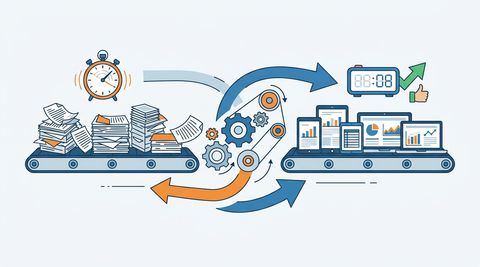
Retail Margin Visibility Transformation
How POS, inventory and cost data were joined for a retailer so margin was visible by store and product without manual assembly.
Key outcomes
A multi-store retail group operating across 32 locations lacked clear visibility into product-level margin and inventory performance. Sales, inventory and financial data were stored across separate POS, ERP and inventory management systems, making it difficult for leadership to obtain a unified view of retail performance.
Store managers and executives relied on periodic spreadsheet reports to review sales trends, product profitability and inventory levels. These reports were often delayed and provided limited visibility into real-time performance. As a result, leadership struggled to identify underperforming products, monitor store-level profitability and detect inventory risks before they impacted revenue or margins.
Roar Data implemented a Power BI retail performance reporting framework designed to integrate operational data from POS systems, ERP platforms and inventory management tools into a unified retail analytics model. This centralised data model standardised reporting metrics across all stores and product categories, enabling consistent performance monitoring across the organisation.
Executive dashboards were developed to provide real-time visibility into margin by SKU, store performance, product category profitability and inventory turnover. Leadership could quickly identify low-margin products, monitor stock availability and detect potential inventory shortages or overstock risks across all locations.
With improved visibility into retail performance, leadership teams were able to make faster and more informed decisions around pricing, purchasing and product assortment.
The new Power BI dashboards enabled the organisation to move from reactive reporting to proactive retail performance management across all 32 stores.What changes across engagements
Used in weekly meetings
Numbers no longer debated
Reporting no longer rebuilt manually
Related services
Power BI Consulting
Roar Data helps Australian organisations eliminate spreadsheet reporting, unify fragmented systems and deliver real-time executive, financial and operational dashboards using Microsoft Power BI.
Explore servicePower BI Managed Services
Ensure your dashboards stay accurate, secure and performance-ready with proactive Power BI monitoring, optimisation and continuous improvement.
Explore servicePower BI Training Brisbane
Practical Power BI training for Brisbane teams that need reports to be maintainable, commercially useful, and easier to run day to day.
Explore serviceMore case studies
Manufacturing Performance Optimisation
How production, quality and cost data were joined for a manufacturer so plant performance and margin could be reviewed in one place.
Read the case studyEngineering Project Performance & Cost Control Transformation
How project cost, programme and margin reporting was rebuilt for an engineering business so job performance was visible before month-end.
Read the case studyHealthcare Analytics Transformation
How workforce, patient flow and financial reporting were brought together for a healthcare provider across multiple sites.
Read the case studyFind out what is slowing your reporting down
If your reporting still depends on manual work, spreadsheet fixes, or numbers people do not fully trust, we can map out a practical way forward.