

Self-Service BI: Empowering Brisbane Teams to Explore Data
Self-service BI lets Brisbane teams explore their own data without waiting on IT. Here's how to make it work for your organisation.
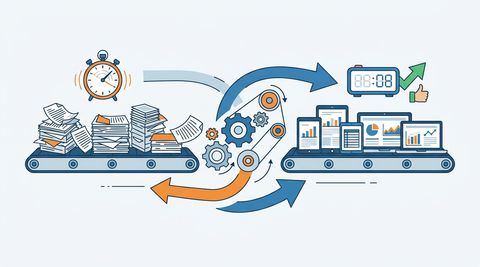
Your sales manager wants to know which product lines are underperforming this quarter. Your operations lead needs last week's delivery times broken down by suburb. Both of them are waiting on IT to run a report. In the meantime, someone's built a spreadsheet. Then another one. Then a third with different numbers. Sound familiar? Self-service BI is solving this exact problem for Brisbane businesses right now, putting the power to explore data directly into the hands of the people who need it most, without writing a line of code or waiting in a ticket queue.
What Self-Service BI Actually Means
Self-service BI means your non-technical staff can build their own reports, slice their own dashboards, and answer their own questions with data. They don't need to know SQL. They don't need to understand how the database is structured underneath. They just need a well-designed environment and the confidence to use it.
Tools like Microsoft Power BI are built for exactly this. A marketing coordinator can drag and drop fields to build a campaign performance report. A finance analyst can filter revenue by product category, time period, or customer segment, without a single spreadsheet formula in sight. Once the data model is set up correctly, the tool does the heavy lifting.
That last part is where most organisations get unstuck. Self-service BI doesn't mean giving everyone access and hoping for the best. It means building a solid data foundation first, then opening it up to your team in a controlled, intuitive way. Get that right and your team will genuinely run with it.
Why Brisbane Teams Are Still Stuck Waiting on IT
The reality for many Brisbane organisations is that data requests pile up in IT queues. A report that takes a developer two or three hours to build gets pushed behind system maintenance, security patches, and bigger project work. By the time it arrives in your inbox, the decision has already been made, often based on a gut feel and an outdated spreadsheet someone emailed around last week.
This creates a real cost. Decisions slow down. Duplicate spreadsheets multiply across the business, each with slightly different numbers. Frustration grows on both sides. The IT team isn't the problem. The process is.
Self-service BI doesn't cut IT out of the picture entirely. It shifts their role. Instead of fielding every report request manually, they focus on building and maintaining the underlying data model. The business team handles the analysis from there. Everyone does what they're actually good at, and decisions happen in hours rather than weeks.
Here are some signs your organisation is ready to make the switch:
- Your staff regularly ask IT for the same reports with minor variations each time
- Decisions are being made from exported spreadsheets rather than live data
- Different departments are working from different versions of the same numbers
- Your IT or BI request queue has a backlog measured in weeks, not hours
- Key stakeholders can't answer a basic data question without waiting on someone else
How to Make Self-Service BI Work in Practice
The starting point isn't picking a tool. It's understanding what questions your team actually needs to answer. Before you deploy anything, map out the key decisions your business makes each week and trace back to the data that drives them. That exercise alone will save you months of rework down the track.
Once the data model is solid, training becomes the critical next step. Not training in how to click buttons, but training in how to think about data. Your team needs to understand what a measure is versus a dimension, how filters interact across a report page, and how to spot when a number looks wrong. That kind of thinking doesn't come from a YouTube tutorial. Investing in proper self-service BI training is the difference between a tool your team uses every day and one that collects digital dust.
Governance matters too. You'll want to define who can publish reports to the broader organisation, how data fields are named consistently, and how you handle sensitive financial or customer information. None of this needs to be complicated or bureaucratic. A simple set of shared standards will do more for adoption than any advanced feature in the platform.
Getting Started Without Overcomplicating It
Start small. Pick one department with a clear, well-understood data need and build a proof of concept. Get their feedback. Fix what doesn't work. Then expand. Rolling out self-service BI across an entire organisation at once is the fastest way to create chaos and erode trust in your data.
The Brisbane businesses that get the most out of self-service BI treat it as an ongoing capability, not a one-off project. They invest in the right tooling, engage good BI strategy consulting early on, and commit to building data literacy across their teams over time. The payoff is real: faster decisions, less dependency on IT, and a team that genuinely trusts the numbers in front of them.
If you're ready to explore what self-service BI could look like for your Brisbane business, the team at Roar Data can help you get there. Whether you're starting from scratch or trying to fix a BI rollout that hasn't landed well, we'll work with you to build something your team will actually use. Get in touch and let's start the conversation.
Where the aim is for the team to run it themselves afterwards, Power BI training on your own reports covers how that is usually structured.
Does this sound familiar?
If your reporting has these same friction points, talk through what should change first.
More insights
Real Power BI Dashboard Examples for Manufacturing in Queensland
Brisbane manufacturers are seeing real gains with data. Discover practical Power BI dashboard examples manufacturing teams use to boost production and quality. Learn how data transforms operations.
Power BI vs Excel: When Brisbane Businesses Should Make the Switch
Are your monthly reports a nightmare? Discover the key differences between Power BI vs Excel in Brisbane. Learn when it's time to upgrade for better insights and efficiency.
How to Choose the Right Power BI Consultant
Finding the right Power BI consultant in Brisbane is crucial for successful data analytics. Learn what to look for, from local expertise to a proven track record, to ensure your business makes informed decisions.
Related services
Power BI Training Brisbane
Practical Power BI training for Brisbane teams that need reports to be maintainable, commercially useful, and easier to run day to day.
Explore servicePower BI Dashboard Development Brisbane
Dashboard development for Brisbane businesses that need clearer management reporting, stronger KPI accountability, and less spreadsheet rework.
Explore servicePower BI Consulting
Roar Data helps Australian organisations eliminate spreadsheet reporting, unify fragmented systems and deliver real-time executive, financial and operational dashboards using Microsoft Power BI.
Explore serviceGet a practical view of what your reporting should look like
If the issues in this article sound familiar, we can review your current reporting environment and show where the friction is coming from.