

Power BI dashboards for Transportation teams in Brisbane
Brisbane-based, operator-led reporting support for transportation teams that need clearer KPIs, less manual reporting, and numbers the business can trust.
Live transportation dashboard preview
A working illustration of the reporting we typically build for transportation clients in Brisbane and Queensland. Numbers are illustrative — yours land in the same layout once we connect your data sources.
Loading dashboard preview…
Transportation reporting in Brisbane and Queensland
Transportation reporting often needs better visibility across fleet, route, service reliability, maintenance, utilisation, and cost control.
Service performance here comes down to gross margin, occupancy and roster efficiency, spread across Excel workbooks, booking systems and MYOB. Each system is right about its own part and none of them agrees on the total, so the reporting job becomes reconciliation rather than analysis.
We join those sources into one model, settle the KPI definitions with the people accountable for them, and give fleet, route, and operational teams numbers current enough to act on while the week is still in play.
The meeting this is built for
The monthly fleet review. Fleet management has vehicle utilisation data from telematics. Maintenance has cost and downtime from the CMMS. Operations has service reliability from the scheduling system. The operations director cannot see fleet health, route performance, and cost per km in one view. This reporting is built so the fleet meeting starts with availability, utilisation, maintenance cost, and service reliability - across the entire fleet.
Who this reporting is built for
Operations / General Manager
- Cares about
- service quality, labour cost, and customer satisfaction
- Frustrated by
- operational data scattered across booking, POS, and roster systems
- Needs to decide
- staffing, pricing, and service improvement
CFO / Finance Manager
- Cares about
- venue or branch profitability and cost control
- Frustrated by
- financial reporting requiring manual data from multiple platforms
- Needs to decide
- budget management, pricing, and investment
CEO / Managing Director
- Cares about
- multi-location performance and growth
- Frustrated by
- inconsistent reporting across locations
- Needs to decide
- expansion, investment, and operational priorities
Marketing / Commercial Lead
- Cares about
- channel performance and customer acquisition cost
- Frustrated by
- marketing data disconnected from revenue outcomes
- Needs to decide
- marketing spend allocation and channel strategy
What's going wrong now
Booking, POS, and payroll data sit in separate systems.
Profitability by location is only known at month-end.
Labour cost is not visible in real-time.
Multi-location comparison requires manual data stitching.
The trading review starts with data questions, not performance discussion.
What changes after this is built
Common transportation reporting problems
Xero and MYOB each hold part of the same answer and disagree on the total
Utilisation and service level are calculated differently by finance and operations, and both are defended
Reporting still depends on Excel workbooks, manual checks and copied values
There is no clean single view by branch, venue, territory and team
Review meetings lose time validating the data before the decision can start
Customer volume arrives after the window in which anyone could have acted on it
Too much of the reporting lives with one person, or in one undocumented workbook
Existing Power BI reports are slow, stale, or quietly not trusted
Managers cannot drill into a number without asking someone to rebuild the report
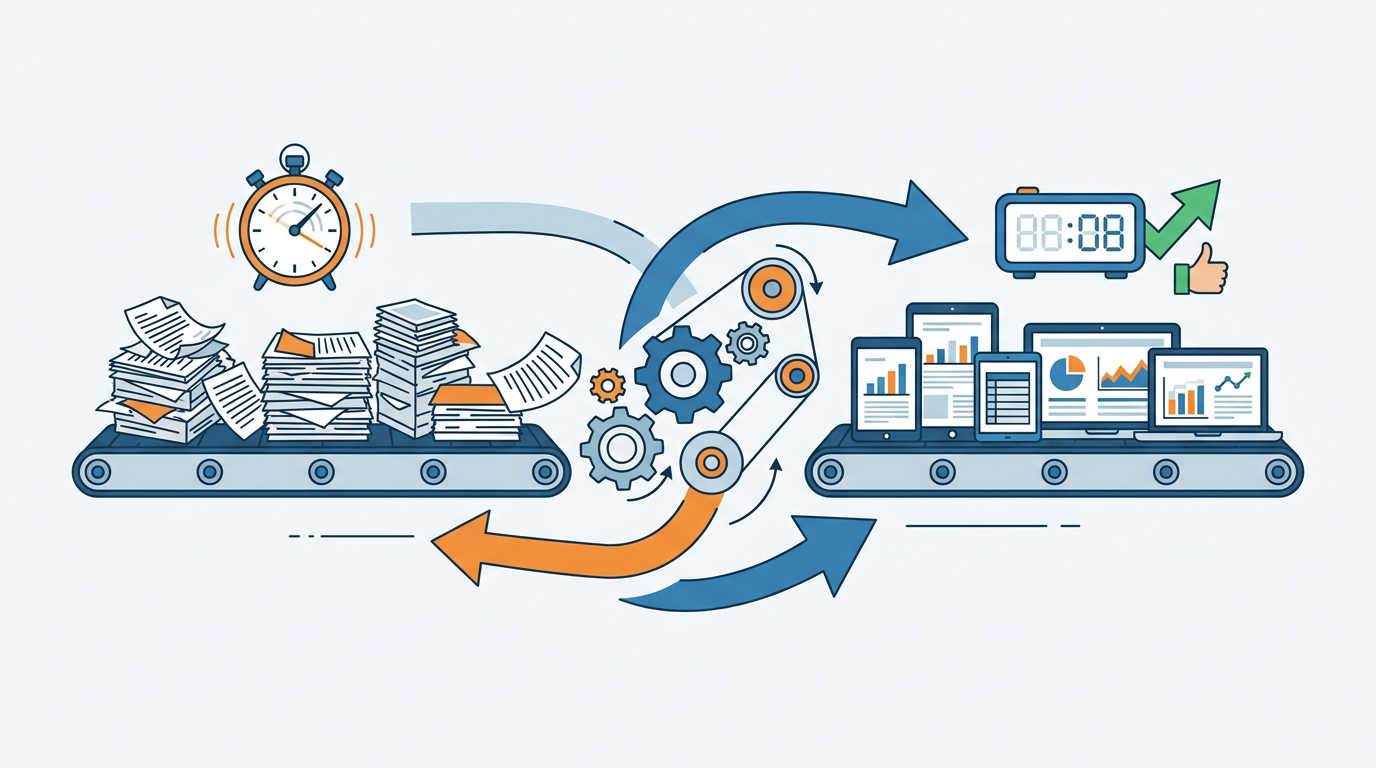
Assembling transportation reporting takes longer than reviewing it does
Repeat activity is hard to compare across locations on a like-for-like basis
Multiple operational platforms create the same manual reporting twice
What changes
What this work typically achieves
What that usually looks like in Transportation
What people notice day to day
Reviewed in every weekly trading meeting
Operational performance visible daily
Labour cost tracked in real-time
Book a reporting clarity call
You'll leave with a written action plan: speed issues, KPI drift, governance gaps, and a practical 30-day fix path.
Systems and data sources we connect
Reporting friction often starts because the right data sits across disconnected platforms. We connect the sources that matter for transportation reporting.
Operational platforms
Commercial and finance systems
Files and connectors
What we build for transportation teams
Venue, branch, or site dashboards
Compare service, labour, utilisation, and profitability across locations.
Sales and booking reporting
A clearer view of demand, conversion, channel performance, and customer mix.
Labour and utilisation dashboards
Understand staffing efficiency, roster pressure, and service capacity.
Customer and service reporting
Track complaints, service levels, volume, and operational quality.
Revenue and margin dashboards
Connect activity volume to cost, pricing, and profitability performance.
Management review packs
Make weekly and monthly reporting faster to prepare and easier to use.
Key transportation KPIs and decision metrics
Demand and service
- bookings
- occupancy
- utilisation
- service level
- customer volume
- repeat activity
Labour and operations
- labour cost
- roster efficiency
- time to serve
- pick accuracy
- delivery performance
- complaint rate
Commercial results
- gross margin
- revenue per unit
- average transaction value
- cost to serve
- channel mix
- budget variance
What becomes easier after implementation
The value is not only in the dashboard or the data model. It is in what changes day to day once reporting stops being a source of friction.
Why Roar Data for transportation reporting
Transportation reporting often needs better visibility across fleet, route, service reliability, maintenance, utilisation, and cost control.
That is the environment the reporting has to survive, so we build it around how fleet, route, and operational teams actually work - what gets asked in the meeting, what has to reconcile, and what breaks when one person is on leave.
We are Brisbane-based and work across Queensland and the rest of Australia. For transportation that matters less for proximity than for availability: someone who will sit in the review where the numbers get argued about, rather than only in the handover.
The test is whether the reporting still gets opened six months later without us. If it needs a specialist to maintain, it was built wrong.
Transportation reporting FAQs
Which systems can you connect Power BI to for transportation reporting?
Which transportation reporting metrics do you model first?
Can you fix an existing transportation Power BI setup rather than rebuild it?
Can you report across multiple branches?
Do you need to understand transportation reporting to build it?
Talk through your transportation reporting
If your reporting still depends on manual work, spreadsheet fixes, or numbers people do not fully trust, we can map out a practical way forward.
Our services
Power BI Consulting
Roar Data helps Australian organisations eliminate spreadsheet reporting, unify fragmented systems and deliver real-time executive, financial and operational dashboards using Microsoft Power BI.
Explore servicePower BI Managed Services
Ensure your dashboards stay accurate, secure and performance-ready with proactive Power BI monitoring, optimisation and continuous improvement.
Explore servicePower BI Training Brisbane
Practical Power BI training for Brisbane teams that need reports to be maintainable, commercially useful, and easier to run day to day.
Explore serviceOther industries
Manufacturing
Brisbane and wider Queensland manufacturing businesses often juggle ERP data, production systems, maintenance logs, quality records, and spreadsheet-based shift reporting across multiple teams. We help turn that fragmented reporting environment into something leadership and managers can use with more confidence.
Explore industryPharmaceuticals
Pharmaceutical reporting usually spans batch records, QA systems, validation documentation, ERP data, and finance reporting, with a high need for traceability and disciplined KPI definitions. We help turn that fragmented reporting environment into something leadership and managers can use with more confidence.
Explore industryFMCG & Consumer Goods
Queensland FMCG businesses need fast visibility across sales, inventory, production, distribution, and margin without waiting for month-end clean-up. We help turn that fragmented reporting environment into something leadership and managers can use with more confidence.
Explore industryAgriculture
Agriculture reporting across Queensland often spans sites, seasons, suppliers, logistics, and operational logs that are not naturally in one clean reporting structure. We help turn that fragmented reporting environment into something leadership and managers can use with more confidence.
Explore industry