

Power BI dashboards for Agriculture teams in Brisbane
Brisbane-based, operator-led reporting support for agriculture teams that need clearer KPIs, less manual reporting, and numbers the business can trust.
Live agriculture dashboard preview
A working illustration of the reporting we typically build for agriculture clients in Brisbane and Queensland. Numbers are illustrative — yours land in the same layout once we connect your data sources.
Loading dashboard preview…
Agriculture reporting in Brisbane and Queensland
Agriculture reporting across Queensland often spans sites, seasons, suppliers, logistics, and operational logs that are not naturally in one clean reporting structure.
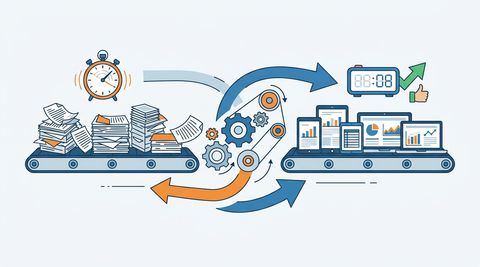
The numbers that decide an agriculture week - OTIF, cost per unit and throughput - are produced by MES platforms, SQL Server and Oracle, which were bought at different times to solve different problems and were never meant to be read together. So they get reconciled by hand, and the answer arrives after the shift it was supposed to inform.
We connect those sources directly, agree what each metric counts before anyone builds a visual, and hand agricultural and agribusiness teams reporting that refreshes on its own. The measure of success is that the meeting opens on what to do, not on whether the figures are right.
The meeting this is built for
The seasonal performance review. The farm manager has yield data in a notebook. Finance has cost data from the accounting system. The logistics team has freight costs in spreadsheets. The board wants a consolidated view. This reporting is built so the meeting starts with cost per hectare, yield by variety, input effectiveness, and freight cost - in one view, with no manual assembly.
Who this reporting is built for
Farm / Station Manager
- Cares about
- yield, input cost, and seasonal performance
- Frustrated by
- operational data locked in disparate systems and notebooks
- Needs to decide
- planting schedules, input application, and harvest timing
Operations Manager
- Cares about
- cross-property performance and logistics coordination
- Frustrated by
- manual consolidation of site-level data each reporting period
- Needs to decide
- resource allocation, contractor deployment, and equipment utilisation
CFO / Finance Manager
- Cares about
- cost per hectare, commodity margin, and cash cycle
- Frustrated by
- agronomic and financial data sitting in completely separate systems
- Needs to decide
- input purchasing, hedging, and capital investment priorities
Supply Chain / Logistics Lead
- Cares about
- freight cost, storage utilisation, and dispatch timing
- Frustrated by
- no single view of product flow from paddock to market
- Needs to decide
- logistics routing, storage allocation, and buyer fulfilment
Agronomist / Technical Lead
- Cares about
- input effectiveness, soil data, and yield modelling
- Frustrated by
- trial and crop data that is hard to compare across seasons
- Needs to decide
- input recommendations, variety selection, and program design
Board / Investor stakeholders
- Cares about
- enterprise performance and seasonal outlook
- Frustrated by
- board packs assembled manually from scattered sources
- Needs to decide
- capital allocation, growth strategy, and risk management
What's going wrong now
Operational and financial data live in different systems with different definitions.
The weekly review loses time reconciling numbers instead of making decisions.
One person carries the entire reporting load.
Issues are discovered after the reporting period closes, not during it.
Leadership cannot drill into the numbers without requesting a custom report.
What changes after this is built
Common agriculture reporting problems
SAP and Oracle each hold part of the same answer and disagree on the total
Schedule adherence and cost per unit are calculated differently by finance and operations, and both are defended
Reporting still depends on Excel workbooks, manual checks and copied values
There is no clean single view by site, line, shift and asset
Review meetings lose time validating the data before the decision can start
Gross margin arrives after the window in which anyone could have acted on it
Too much of the reporting lives with one person, or in one undocumented workbook
Existing Power BI reports are slow, stale, or quietly not trusted
Managers cannot drill into a number without asking someone to rebuild the report
Assembling agriculture reporting takes longer than reviewing it does
Planned versus actual is weak across shifts, lines, sites and assets
Variance to plan is visible per site but not comparable between them
What changes
What this work typically achieves
What that usually looks like in Agriculture
What people notice day to day
Used in weekly operational reviews
Numbers no longer debated in meetings
Reporting no longer rebuilt manually each period
Book a reporting clarity call
You'll leave with a written action plan: speed issues, KPI drift, governance gaps, and a practical 30-day fix path.
Systems and data sources we connect
Reporting friction often starts because the right data sits across disconnected platforms. We connect the sources that matter for agriculture reporting.
ERP and finance platforms
Operational and plant systems
Data interfaces and files
What we build for agriculture teams
Executive performance dashboards
A shared leadership view across revenue, margin, output, labour, and operational variance.
Daily operational reporting
Shift, line, site, or asset reporting that helps managers respond earlier.
Production and quality dashboards
Yield, scrap, downtime, batch, deviation, and throughput performance in one reporting model.
Inventory and supply reporting
Stock position, purchase visibility, supplier performance, and service risk tracking.
Maintenance reporting
Planned maintenance, breakdowns, backlog, and asset reliability reporting.
Finance and operations bridge reporting
A cleaner link between cost, production, service, and margin outcomes.
Key agriculture KPIs and decision metrics
Operational performance
- OEE
- throughput
- downtime
- yield
- scrap
- labour efficiency
Supply and service
- OTIF
- inventory accuracy
- stock turns
- supplier performance
- backlog
- schedule adherence
Financial impact
- cost per unit
- gross margin
- variance to plan
- working capital
- maintenance cost
- product profitability
What becomes easier after implementation
The value is not only in the dashboard or the data model. It is in what changes day to day once reporting stops being a source of friction.
Why Roar Data for agriculture reporting
Agriculture reporting across Queensland often spans sites, seasons, suppliers, logistics, and operational logs that are not naturally in one clean reporting structure.
That is the environment the reporting has to survive, so we build it around how agricultural and agribusiness teams actually work - what gets asked in the meeting, what has to reconcile, and what breaks when one person is on leave.
We are Brisbane-based and work across Queensland and the rest of Australia. For agriculture that matters less for proximity than for availability: someone who will sit in the review where the numbers get argued about, rather than only in the handover.
The test is whether the reporting still gets opened six months later without us. If it needs a specialist to maintain, it was built wrong.
Agriculture reporting FAQs
Which systems can you connect Power BI to for agriculture reporting?
Which agriculture reporting metrics do you model first?
Can you fix an existing agriculture Power BI setup rather than rebuild it?
Can you report across multiple sites?
Do you need to understand agriculture reporting to build it?
Talk through your agriculture reporting
If your reporting still depends on manual work, spreadsheet fixes, or numbers people do not fully trust, we can map out a practical way forward.
Our services
Power BI Dashboard Development Brisbane
Dashboard development for Brisbane businesses that need clearer management reporting, stronger KPI accountability, and less spreadsheet rework.
Explore servicePower BI Training Brisbane
Practical Power BI training for Brisbane teams that need reports to be maintainable, commercially useful, and easier to run day to day.
Explore servicePower BI Managed Services
Ensure your dashboards stay accurate, secure and performance-ready with proactive Power BI monitoring, optimisation and continuous improvement.
Explore serviceOther industries
Logistics & Supply Chain
Logistics reporting usually spans WMS, TMS, ERP, freight cost, route performance, labour, and customer service data that do not reconcile cleanly by default. We help turn that fragmented reporting environment into something leadership and managers can use with more confidence.
Explore industryTransportation
Transportation reporting often needs better visibility across fleet, route, service reliability, maintenance, utilisation, and cost control. We help turn that fragmented reporting environment into something leadership and managers can use with more confidence.
Explore industryMining & Natural Resources
Mining and resources reporting typically spans site performance, maintenance, safety, contractor activity, production, and cost data across disconnected source systems. We help turn that fragmented reporting environment into something leadership and managers can use with more confidence.
Explore industryEnvironmental Services & Waste Management
Environmental services reporting usually combines route data, site throughput, maintenance, customer contracts, compliance, and invoicing across different systems. We help turn that fragmented reporting environment into something leadership and managers can use with more confidence.
Explore industry