

Dashboard Development Company: 7 Questions Darwin Buyers Ask
Seven questions Darwin buyers should ask any dashboard development company before signing off on reporting for mining, defence or agribusiness operations.
It's 7am on a Monday and the operations manager at a Darwin mining services contractor is trying to reconcile three different site reports before a 7:30 call with the client's head office in Perth. One spreadsheet says contractor hours are up. Another says they're down. Nobody trusts either number, and the call starts in twenty minutes. If that scene feels familiar, you already understand why picking the right dashboard development company matters more than almost any other software decision you'll make this year.
Why Darwin's Reporting Problems Don't Look Like Sydney's
Darwin runs on a mix that most capital city vendors have never actually reported on. Mining services, defence contracts tied to Robertson Barracks, oil and gas, agribusiness, tourism and government work all sit in the same small market, often within the same client's portfolio. Add a FIFO-heavy workforce and remote sites with patchy connectivity, and you've got a reporting problem that a generic retail dashboard template was never built to solve.
Plenty of Darwin businesses answer to a head office in Perth, Melbourne or Adelaide, which means local numbers need to roll up cleanly into national reporting without losing the detail that matters on the ground. A safety incident logged on a laptop at a remote camp has to reach the same dashboard as payroll data sitting in a city office. That's not a small ask, and it's exactly where a lot of BI projects quietly fail.
The market here is smaller than Brisbane or Sydney, but the stakes aren't. A contractor performance dashboard that misreports hours on a defence project doesn't just look bad, it can affect the next tender. That's why industry fluency matters as much as technical skill when you're choosing who builds your reporting.
Seven Questions That Separate Real Capability From a Slick Pitch
Most vendors can produce a nice-looking demo. Fewer can explain how their dashboard survives a site with no signal for three days, or how it handles a contractor roster that changes every swing. Before you sign anything, ask any dashboard development company these seven questions and listen closely to how confidently they answer.
- Do they understand rosters, remote sites and patchy connectivity, or will your dashboard break the first time a camp goes offline?
- Can they show you work built for a business like yours, not just generic retail or finance examples dressed up as case studies?
- What platform do they actually build on, and can you see real Power BI dashboard development work rather than a template pulled off the shelf?
- How do they pull together data from disconnected sources, like a payroll system in Perth and a safety log kept on a site laptop?
- Who trains your team to use and maintain it, and what happens when the person who built it moves on to another job?
- What's the real build timeline, and will you see working stages along the way instead of one big reveal three months out?
- What does support look like once it's live, especially for sites that sit hours from Darwin's CBD?
What This Looks Like Once the Dashboard Is Actually Built
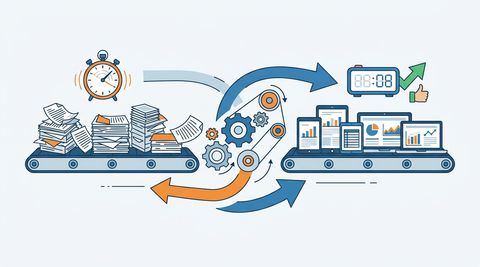
Take a mining services contractor juggling reports from three different sites around the Top End. Before, safety incidents, contractor hours and site output lived in separate spreadsheets that someone manually stitched together every Friday. After the rebuild, all three feed one live dashboard, so a supervisor in Darwin and a client in Perth are looking at the same numbers in real time, not last week's version.
A defence supplier managing multiple contracts tied to base operations faces a different headache: project cost and milestone data scattered across procurement systems and project trackers. Getting that into a single view means milestone slippage shows up weeks before it becomes a genuine problem, not after the fact in a quarterly review.
And an agribusiness exporting out of the Territory needs yield and supply-chain visibility that doesn't fall over when a truck's out of range for half a day. These aren't hypothetical projects. They're the kind of work we cover in our case studies, and they all share one thing in common: the dashboard was built around how the business actually operates, not how a template assumed it should.
Picking the Partner, Not Just the Build
A dashboard is never really finished. Rosters change, contracts renew, new sites come online, and your reporting needs to keep pace without a six-week wait for a consultant to fly back in. That's why support and training matter as much as the initial build, particularly when your team is spread across sites hours apart from Darwin's centre.
We work remotely with clients across the Territory from our base in Brisbane, which means you get proper Power BI dashboard development expertise without needing a local office on every job. What you should never compromise on is a partner who takes the time to understand mining, defence, agribusiness or whichever sector you're in, before they write a single line of DAX.
If Monday mornings still start with mismatched spreadsheets instead of a dashboard you trust, that's worth fixing before it costs you another tender or another argument over whose numbers are right. Get in touch with Roar Data and we'll walk you through what a build tailored to your Darwin operation could actually look like.
For the wider picture of how this work is run, our Power BI consulting approach across Australia sets out the stages and what each one is meant to settle.
Does this sound familiar?
If your reporting has these same friction points, talk through what should change first.
More insights
Operating Theatre Analytics: Turning Data Into Theatre Time
What theatre reporting looks like for Darwin and Top End providers, built around fly-in specialist blocks, rotating rosters and scarce theatre time.
Power BI Mining Reporting for Queensland Resources Companies
Queensland mining companies use Power BI to turn shift reports, safety records, and equipment data into real-time dashboards their teams can act on.
How to Reduce Reporting Time by 50% with Power BI Automation
Learn how automated data refresh and structured dashboards reduce manual reporting time and improve efficiency.
Related services
Power BI Managed Services
Ensure your dashboards stay accurate, secure and performance-ready with proactive Power BI monitoring, optimisation and continuous improvement.
Explore servicePower BI Dashboard Development Brisbane
Dashboard development for Brisbane businesses that need clearer management reporting, stronger KPI accountability, and less spreadsheet rework.
Explore servicePower BI Consulting
Roar Data helps Australian organisations eliminate spreadsheet reporting, unify fragmented systems and deliver real-time executive, financial and operational dashboards using Microsoft Power BI.
Explore serviceGet a practical view of what your reporting should look like
If the issues in this article sound familiar, we can review your current reporting environment and show where the friction is coming from.